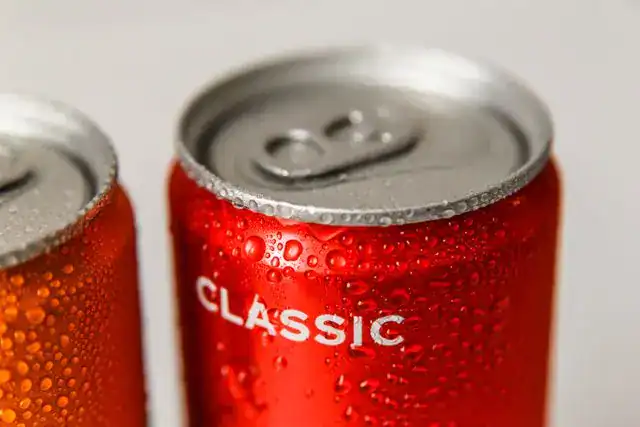
The best beverage packaging material is not automatically the one with the highest recycling rate. Australian brand owners must consider whether the package is actually collected, sorted and remade, how much recycled content it can contain, its transport footprint and whether labels, colours and closures interfere with processing.
Current Australian data gives glass the highest overall packaging recovery rate. Aluminium beverage containers also perform strongly, while PET benefits from low weight and growing bottle-to-bottle capacity. However, no material wins every category.
For most brands, the decision comes down to three broad choices:
- PET bottles: best when low weight, transport efficiency and product visibility are priorities.
- Glass bottles: strongest when high recovery, recycled content, product protection or a refill model can justify the additional weight.
- Aluminium containers: attractive for single-serve products, container-deposit recovery and high-value material recycling.
Download Now: Free PDF Business Owners Guide To Commingled Recycling Bin Services
The Short Answer: Which Material Is Most Recyclable?
Glass currently has the highest measured packaging recovery rate in Australia, but aluminium and PET may produce a lower lifecycle footprint in specific beverage and distribution systems.
APCO’s 2023–24 data recorded:
| Material | Australian recovery indicator | Main circularity advantage | Main limitation |
|---|---|---|---|
| Glass packaging | 80% recovered | High recovery and 54% post-consumer recycled content | Heavy and energy-intensive to manufacture and transport |
| Aluminium beverage packaging | About 64% recovered* | Valuable material with strong closed-loop potential | Virgin aluminium has a high production footprint |
| Rigid PET packaging | About 51% recovered* | Lightweight and suitable for bottle-to-bottle recycling | Design features can reduce sorting and recycled-resin quality |
*Calculated from APCO’s reported placed-on-market and recovery tonnages for beverage aluminium and rigid PET. APCO’s broader material-group rates were 55% for all metal packaging and 28% for all rigid plastics.
Recovery rate is only one measure. A package can be widely collected but recycled into lower-value applications rather than another food-grade container. A genuinely circular package must also generate clean material that manufacturers can use again.
What Does “Recyclable” Actually Mean?
“Technically recyclable” is not the same as being recycled in practice.
For beverage packaging to operate within a circular system, it must:
- Be accepted by kerbside or container-deposit collections.
- Be identifiable by automated sorting equipment.
- Survive sorting without contaminating another material stream.
- Have access to appropriate reprocessing infrastructure.
- Produce material with a viable end market.
- Be capable of replacing virgin material in new packaging.
APCO classified 100% of glass, 99% of metal and 73% of rigid plastic packaging as having good recycling potential in 2023–24. Actual recovery remained lower, demonstrating the difference between good packaging design and real-world collection.
PET Bottles: Lightweight but Design-Dependent
PET is widely used for water, soft drinks, juice and other beverages because it is lightweight, transparent and resistant to breakage. These characteristics can reduce transport fuel and product losses compared with heavier formats.
PET can also support bottle-to-bottle recycling when the recovered resin is sufficiently clean and suitable for food contact. Australia’s growing container-deposit schemes provide cleaner streams of PET than mixed kerbside recycling.
Its weakness is that recyclability depends heavily on design. A PET bottle made from clear, single-layer resin performs very differently from an opaque bottle with a full-body sleeve, incompatible adhesive and PVC components.
How to Design PET Bottles for Recycling
APCO recommends that brands:
- Use clear, unpigmented PET wherever possible.
- Prefer a mono-material structure.
- Avoid PVC components and incompatible barrier layers.
- Use compatible PET, HDPE or PP closures.
- Avoid dark caps and pigments that interfere with sorting.
- Keep labels below 40% of the bottle’s surface where possible.
- Avoid full sleeves unless they are removable and clearly perforated.
- Use adhesives that wash off cleanly under recycling conditions.
- Add the Australasian Recycling Label after completing a PREP assessment.
Clear PET has the broadest range of high-value end markets. Opaque colours, carbon-black pigments and large sleeves can prevent optical sorters from correctly identifying the bottle.
When PET Is the Strongest Choice
PET is often suitable when the beverage:
- Is distributed over long distances
- Requires a lightweight, resealable bottle
- Is sold in larger formats
- Needs transparency
- Can use a meaningful percentage of food-grade rPET
- Is eligible for container-deposit collection
The strongest PET proposition is generally a lightweight, clear bottle with high recycled content and minimal compatible decoration.
Glass Bottles: High Recovery but a Heavy Footprint
Glass performs extremely well in Australia’s recovery system. APCO reported that 80% of glass packaging was recovered in 2023–24, up from 69% the previous year. Glass packaging also contained an average of 54% post-consumer recycled material.
Recovery differed by colour: amber glass reached 93%, clear or flint glass 81%, and green glass 70%. Container-deposit schemes and separate glass collections contributed to the improvement.
Glass has clear commercial advantages. It provides an excellent product barrier, carries premium associations and does not require the same food-contact polymers as plastic.
Its disadvantage is weight. A single-use glass bottle normally requires more material and transport energy than an equivalent PET bottle or aluminium can. Glass furnaces also require substantial heat.
Lifecycle studies repeatedly show that a high recycling rate does not automatically give single-use glass the lowest carbon footprint. A 2026 Australia and New Zealand beverage-packaging study found glass had the highest footprint in the categories where it appeared, largely because of its production intensity and transport weight. The study was industry-commissioned, so brands should use it as one input rather than a universal ranking.
How to Design Glass Bottles for Recycling
Brand owners should:
- Lightweight the bottle without compromising safety.
- Use clear, amber or standard green glass.
- Avoid unusual dark colours that reduce cullet value.
- Minimise label size.
- Prefer paper labels or compatible direct printing.
- Avoid large film labels, metallised decoration and full sleeves.
- Ensure caps and closures can be removed.
- Avoid ceramic swing-top components.
- Increase recycled glass content where technically possible.
APCO warns that broken and contaminated glass in commingled systems may be lost before it reaches remanufacturing. Cleaner, colour-sorted glass has greater bottle-to-bottle value.
When Glass Is the Strongest Choice
Glass becomes more compelling when:
- The product requires an exceptional oxygen or flavour barrier
- Premium presentation is commercially important
- Distribution distances are relatively short
- The bottle contains substantial recycled glass
- A refill or return system is available
- Collection preserves clean, colour-sorted material
Refillable glass should be assessed separately from single-use glass. Repeated reuse can change the lifecycle result significantly, provided return distances, washing requirements and bottle-loss rates are controlled.
Aluminium: Valuable, Lightweight and Highly Recoverable
For beverages, aluminium normally means cans rather than bottles. Cans are lightweight, compact and valuable to recyclers. They are also well suited to container-deposit schemes and can be remade into new aluminium products.
APCO reported 104,418 tonnes of aluminium beverage packaging placed on the Australian market in 2023–24 and 67,342 tonnes recovered. Those figures imply a recovery rate of approximately 64%.
Aluminium’s main environmental risk occurs upstream. Producing primary aluminium is energy-intensive, so recycled content and electricity sources strongly influence its carbon footprint. High recovery alone does not erase the impact of virgin material.
How to Improve Aluminium Packaging Circularity
Brand owners should:
- Specify verified recycled content where supply and product requirements allow.
- Avoid unnecessary plastic sleeves or secondary components.
- Minimise inks, coatings and decorative layers.
- Confirm that internal linings are compatible with existing reprocessing.
- Use standard formats that are recognised by sorting systems.
- Ensure the package remains eligible for container-deposit schemes.
- Assess every component through PREP rather than evaluating the aluminium body alone.
Aluminium works best when collection rates are high, and recovered metal displaces primary aluminium in new products.
When Aluminium Is the Strongest Choice
Aluminium is often suitable for:
- Single-serve beverages
- Products needing rapid chilling
- Events, hospitality and convenience retail
- Brands seeking broad container-deposit compatibility
- Distribution systems where low weight and stackability matter
- Products that do not require a resealable package
Consumer Perception Versus Lifecycle Performance
Consumers often associate glass with quality, purity and sustainability, while viewing plastic less favourably. Those perceptions can be commercially valuable, but they should not replace lifecycle evidence.
Single-use glass may feel environmentally preferable because it is inert and highly recyclable. Its weight and production energy can nevertheless produce a larger carbon footprint than a lightweight PET bottle in a long-distance supply chain.
Plastic may attract negative reactions because of litter and ocean pollution. A well-designed rPET bottle can still perform strongly on transport emissions and material efficiency.
Aluminium is often promoted as infinitely recyclable, but that claim does not reveal the package’s recycled content, collection rate or reliance on primary aluminium.
The right customer message should therefore explain the complete design:
- How much recycled content is included?
- Is the container accepted through a deposit scheme?
- Can it return to food-grade packaging?
- What should the consumer do with the cap and label?
- Has packaging weight been reduced?
- Is the claim supported by evidence?
Avoid calling any material “100% sustainable” or “infinitely recyclable” without explaining the conditions required for that outcome.
How Australia’s Packaging Targets Affect Brand Owners
Australia’s National Packaging Targets called for:
- 100% of packaging to be reusable, recyclable or compostable
- 70% of plastic packaging to be recycled or composted
- 50% average post-consumer recycled content
- The phase-out of problematic and unnecessary single-use plastic packaging
The latest reported results were 86% reusable, recyclable or compostable packaging, a 20% plastic recycling rate and 44% average post-consumer recycled content. The targets were not achieved by 2025, but the Australian Government says businesses should continue working towards them while packaging regulation is reformed.
As of September 2026, the proposed national Design for Kerbside Recyclability Grading Framework had not been formally adopted. Existing co-regulatory obligations continue to apply.
Businesses that manufacture or sell packaging in Australia and earn at least $5 million may have obligations under the Australian Packaging Covenant or state-based implementation of the Used Packaging Materials NEPM. Brand owners should confirm their position before launching a new package.
Use PREP and the Australasian Recycling Label
The Packaging Recyclability Evaluation Portal assesses how a package will behave in Australian and New Zealand collection, sorting and processing systems.
PREP considers:
- Material composition
- Shape, size and weight
- Colours and pigments
- Labels and sleeves
- Adhesives
- Inks and coatings
- Closures
- Sorting behaviour
- Available end markets
The assessment determines the appropriate Australasian Recycling Label. This is more reliable than adding a generic recycling triangle or plastics identification code, neither of which proves that the complete package is recyclable. APCO’s PREP and ARL guidance
A Practical Decision Framework for Beverage Brands
Before selecting PET, glass or aluminium, answer these questions:
- What protection does the beverage require? Consider shelf life, light sensitivity, carbonation, flavour and food-contact requirements.
- Where will it be sold? Model transport distances, export markets, hospitality use and likely disposal location.
- Will it enter a container-deposit scheme? Confirm eligibility, dimensions and labelling requirements in every relevant state.
- Can the package contain recycled material? Obtain evidence of the percentage, source and food-contact suitability.
- Can it return to the same type of package? Bottle-to-bottle and can-to-can applications are stronger circular outcomes than downcycling.
- Will decoration disrupt sorting? Assess the bottle, label, adhesive, cap and sleeve as one package.
- What does the lifecycle assessment show? Compare equivalent product volumes, distribution distances and end-of-life assumptions.
- What will customers understand? Use evidence-based disposal instructions and avoid vague environmental claims.
So, Which Material Should Your Brand Choose?
Choose clear rPET when lightweight distribution, resealability and transport efficiency are priorities and a strong bottle-to-bottle pathway is available.
Next, choose glass when product protection, premium positioning or reuse justifies the additional weight, particularly where distribution is local and the bottle contains substantial recycled glass.
Finally, choose aluminium for lightweight single-serve formats with strong container-deposit recovery, especially where recycled content and efficient production can be verified.
The strongest packaging decision is rarely based on material alone. It combines minimal material use, recycled content, compatible labels and closures, accessible collection, effective sorting and a credible market for the recovered material.
For beverage brands, “most recyclable” should mean the package most likely to complete a genuine circular journey in the market where it is sold.