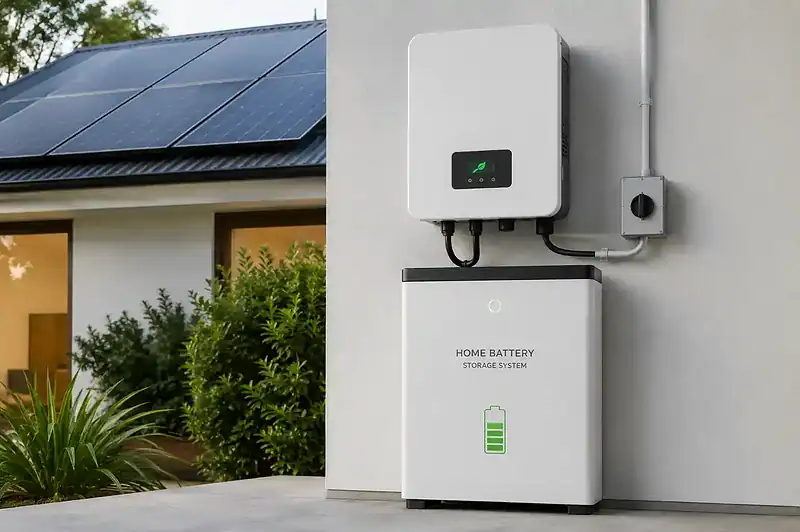
Home Battery Recycling Australia: Australia is entering a new era of renewable energy. With governments introducing generous incentives for home battery systems, more households and businesses are expected to pair rooftop solar with battery storage than ever before.
These subsidies are fantastic news for reducing electricity bills, improving energy independence and supporting Australia’s transition away from fossil fuels. But they also raise an important question that receives far less attention:
What happens to all these batteries once they reach the end of their useful life?
As Australia accelerates its renewable energy transition, home battery recycling in Australia will become just as important as installing the batteries in the first place. Clean energy doesn’t end with generating electricity; it also requires responsible management of the products that make it possible.
>Download Now: Free PDF Business Owners Guide To Commingled Recycling Bin Services
Australia’s Home Battery Boom
Australia already has one of the highest rates of rooftop solar adoption in the world. Millions of homes generate electricity from solar panels every day, reducing pressure on the electricity grid while lowering household energy bills.
Until recently, however, one major limitation remained. Most homes generated electricity during the middle of the day when occupants were at work, then purchased electricity back from the grid during the evening when demand was highest.
Home battery systems solve this problem by storing excess solar energy for use after sunset. Government rebates are now making these systems more affordable, encouraging even greater investment in renewable energy.
While this represents a significant step towards reducing greenhouse gas emissions, it also means Australia will eventually have hundreds of thousands of large lithium-ion batteries reaching the end of their operational lives.
Why Home Battery Recycling Australia Matters
Every product has a lifecycle.
Solar batteries may operate reliably for ten to fifteen years, but eventually they lose capacity and require replacement. As installations continue to increase, so too will the number of batteries requiring responsible disposal and recycling.
Unlike many household products, lithium-ion batteries should never be placed in general waste bins.
They contain valuable materials, including:
- Lithium
- Nickel
- Cobalt
- Copper
- Aluminium
- Steel
Recovering these resources reduces the need for new mining while supporting Australia’s growing circular economy. Effective battery recycling programs in Australia help ensure these valuable materials can be reused in future battery production rather than being lost to landfill.
The Circular Economy Doesn’t End With Renewable Energy
Renewable energy is often viewed as the solution to climate change, but true sustainability requires looking beyond the installation of new technology.
A circular economy aims to keep products and materials in use for as long as possible through repair, reuse and recycling.
Home battery systems are a perfect example.
Rather than viewing batteries as disposable products, Australia has an opportunity to recover valuable metals and manufacture new products using recycled materials. This reduces waste while decreasing demand for newly extracted resources.
As more Australians invest in rooftop solar and battery storage, solar battery recycling will become an increasingly important part of the clean energy supply chain.
The Growing Challenge of Battery Waste
Battery waste is already increasing rapidly.
In addition to home energy storage systems, Australia is seeing rapid growth in:
- Electric vehicles
- Power tools
- Garden equipment
- E-bikes and e-scooters
- Consumer electronics
Many of these products use similar lithium-ion battery technology.
Without effective collection and recycling systems, battery waste could become one of Australia’s fastest-growing waste streams over the coming decades.
This highlights why lithium-ion battery recycling needs continued investment alongside renewable energy incentives.
Why Batteries Should Never Go in General Waste
Improper battery disposal creates several risks.
Damaged lithium-ion batteries can ignite when crushed during waste collection or processing. Fires caused by incorrectly disposed batteries are becoming an increasing challenge for waste facilities, recycling centres and collection vehicles throughout Australia.
There are also environmental concerns.
Sending batteries to landfill wastes valuable resources that could otherwise be recovered and reused. It also increases demand for additional mining to supply future battery manufacturing.
Responsible battery waste Australia programs reduce these risks while supporting a more sustainable resource recovery industry.
Home Battery Recycling Australia: Solar Panels Present Another Recycling Opportunity
Battery recycling is only one part of the renewable energy story.
As Australia’s first generation of rooftop solar systems reaches the end of its life, the country will also need efficient solar panel recycling Australia programs.
Solar panels contain valuable materials including aluminium, glass, copper and silicon that can often be recovered and reintroduced into manufacturing.
Together, solar panel and home battery recycling in Australia represent two important opportunities to strengthen Australia’s circular economy while supporting the continued growth of renewable energy.
Home Battery Recycling Australia: What This Means for Businesses
Although much of the discussion focuses on households, businesses are also investing heavily in rooftop solar and battery storage.
Commercial buildings, warehouses and manufacturing facilities are increasingly installing renewable energy systems to reduce operating costs and improve sustainability.
As these systems age, businesses will also need responsible end-of-life management.
Forward-thinking organisations should consider not only the installation of renewable energy systems but also how batteries and solar equipment will eventually be collected, transported and recycled.
Planning for end-of-life management is becoming an important part of responsible environmental, social and governance (ESG) strategies.
Clean Energy Needs Smart Recycling
Government battery subsidies represent a positive step towards reducing Australia’s carbon emissions.
However, the clean energy transition should not end once batteries are installed.
Building a truly sustainable future means designing products that can be recovered, recycled and reused at the end of their useful lives.
As more Australians embrace renewable energy, home battery recycling Australia will become an essential part of the country’s waste and resource recovery sector.
By investing in both renewable energy and effective recycling infrastructure, Australia can ensure today’s clean energy solutions do not become tomorrow’s waste problem.
The transition to renewable energy is well underway. The next challenge is making sure the entire lifecycle of batteries and solar equipment supports a genuine circular economy.